


Move-In / Move-Out Inspection
Document today.
Avoid disputes tomorrow.
We document your property’s condition, including existing defects and damage, through a detailed inspection and photographic report. This helps tenants and landlords protect their interests and avoid disputes over security deposits.
DubaiAbu DhabiRas Al Khaimah
- For
- Tenants: protect your deposit.
Landlords: prevent disputes. - Book
- Before collecting or returning your keys
- You get
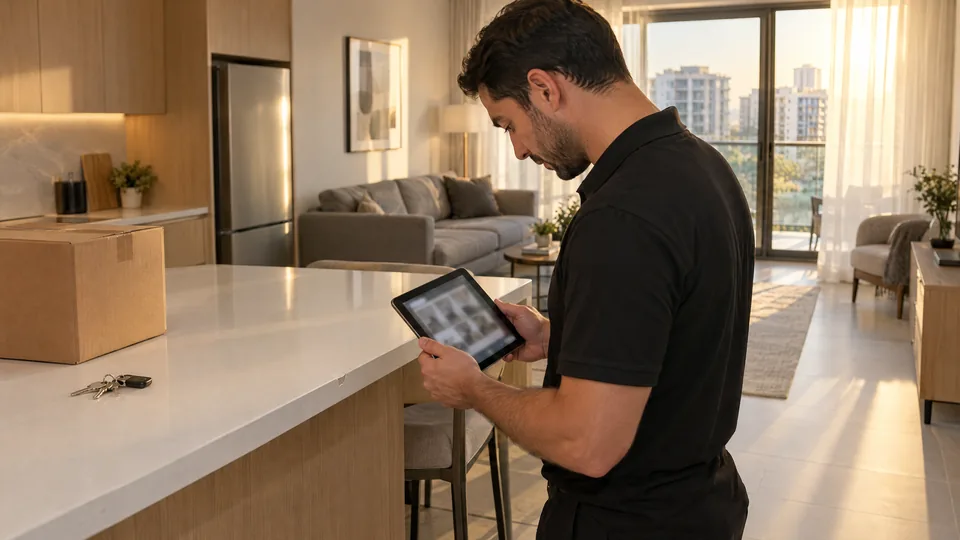
- An inspection report with dated photographs
Why record it
Clear documentation.
Protected deposits.
Fewer disputes.
An independent photographic record establishes the property’s condition and provides a reliable reference. This helps tenants and landlords resolve disputes over damage and deposit deductions fairly.
- 01
For tenants
Document the property’s condition before moving in, so you have evidence of pre-existing damage when your tenancy ends.
- 02
For landlords
Establish a clear record of your property’s condition to distinguish normal wear and tear from tenant-caused damage.
- 03
Between tenancies
Assess the property’s condition between tenancies to identify necessary repairs and prepare for the next occupant.
Why it matters
Why move‑out inspections matter in Dubai.
- 01
Security deposit deductions
Disputes over damage and repair costs.
- 02
Delayed clearance NOC
Unresolved issues may delay clearance approval.
- 03
Unfair damage claims
Being held responsible for pre-existing defects.
How it works
Move in with confidence.
Move out with clarity.
- 01
Book your inspection
Schedule before collecting or returning your keys.
- 02
Property condition assessment
We inspect and photograph the property’s condition.
- 03
Receive your report
A detailed inspection report with dated photographs.
- 04
Compare & handover
Use the report as a reference for a fair handover.
Drag to compare
Same property,
different moments.
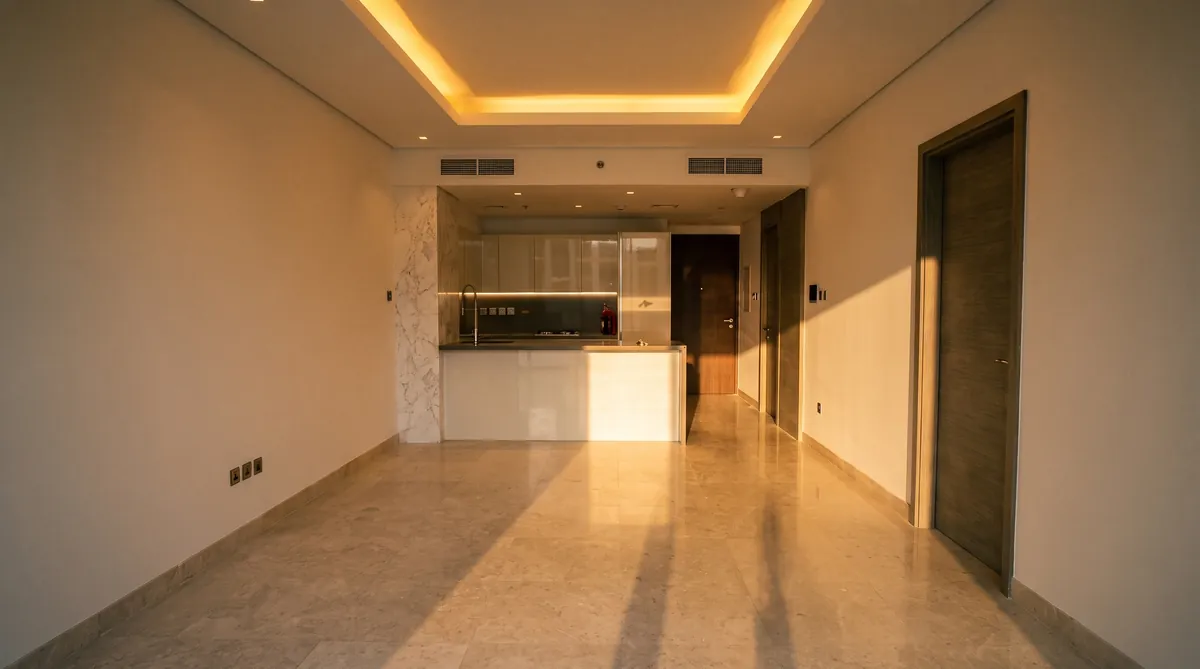
See how the property’s condition changes between move-in and move-out. Compare photographs taken at two different points in time.
Illustrative photos.


What we check
A closer look
at what matters.
We examine the property’s finishes, fixtures, and essential systems to establish a clear record of its condition, helping avoid disagreements when moving in or out.
01Interior finishes & wet areas
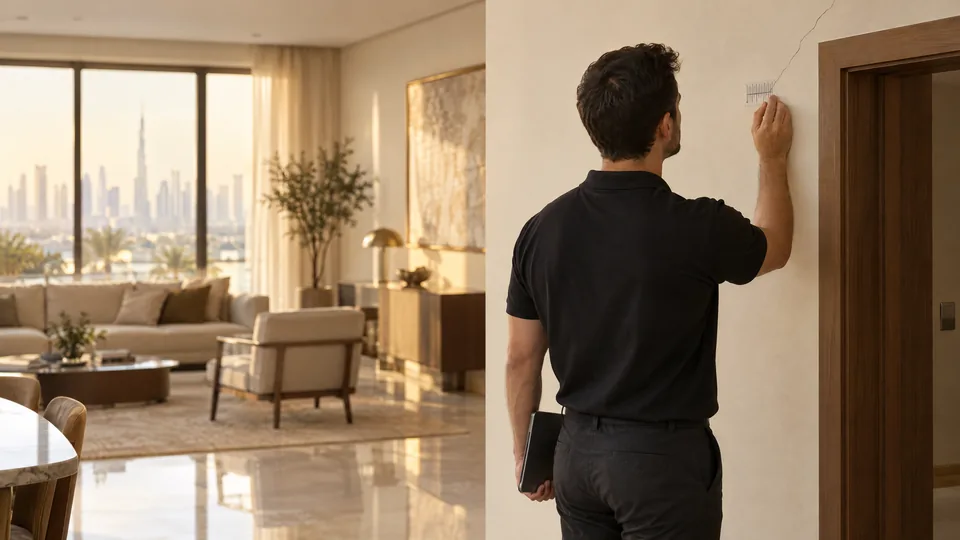
- Cracks & damageMarks, holes and damage on walls, ceilings and floors
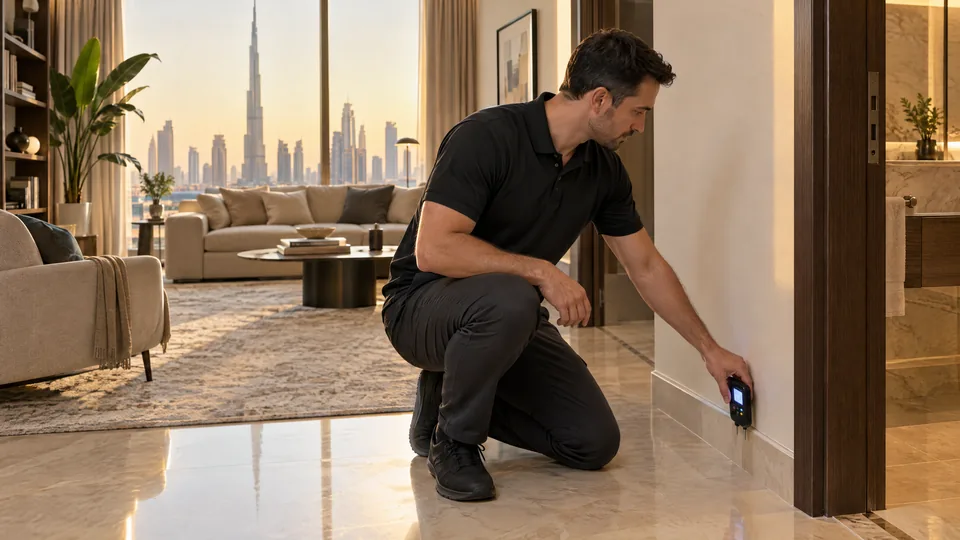
- Tiles & stoneChips, cracks, hollow areas and visible repairsHollow tile detection
- Grout & sealantsDiscoloured silicone, cracked grout, skirting joints
- Moisture & leakageStaining or damp around wet areasMoisture meter
02Joinery, kitchens & appliances
- Cabinets & wardrobesDoors, shelves and finish, inside and out
- Worktops & splashbacksChips, burns, cracks and sealant
- Appliance operationEach supplied appliance switched on and run
- Fixtures & accessoriesHandles, shelves and internal fittings present and secure
03Doors, windows & glazing
- Locks & hardwareLocks, handles and hinges on every door
- Operation & alignmentDoors and windows open, close and latch
- Glass conditionScratches, cracks and chipsInspection light
- Tracks & drainageBalcony sliders run freely, outlets clear
04Plumbing & drainage
- Fixtures & connectionsTaps, WCs, seals and visible pipework
- Hot & cold waterSupply, temperature and mixer operation
- DrainageFlow at every outlet; camera where one runs slowDrain camera
05HVAC & air conditioning
- Cooling performanceSupply and return temperatures in each roomThermo-hygrometer
- ThermostatsEach one responds to its setting
- Filters & ductworkAccessible filters and their conditionInspection light
06Electrical & lighting
- Switches & lightsEvery switch and light fitting operated, room by room
- SocketsPower at each socket, damaged faceplates notedSocket tester
- Fittings & coversLight fittings, shades and covers present and secure
Anything that doesn’t work is recorded, room by room.
Wear or damage
Normal wear and tear, or property damage?
Common examples to help you tell the difference during a move-out inspection.
 Wear & tearMinor scuff marks or light fading.
 DamageHoles, deep scratches or significant stains.
 Wear & tearLight surface scratches from everyday use.
 DamageCracks, chips or broken tiles.
 Wear & tearMinor marks or light surface wear.
 DamageBurn marks, deep stains or broken fittings.
 Wear & tearLight limescale or water marks.
 DamageCracks, chips or broken fixtures.
 Wear & tearMinor wear to handles or paint.
 DamageDents, cracks or broken locks and handles.
General examples only. Your tenancy contract sets the terms, and in a dispute the parties or the relevant authority decide.
Every ELUMEX inspection
- Engineer-led25+ years in construction
- 2–4 hours on siteVisual, non-destructive
- Report within 24 hoursPrepared using Onsite
Frequently asked questions
Questions about move-in and move-out.
Short answers. Anything specific? Message us on WhatsApp.
Why do I need a move-in inspection report?
Because at move-out, the only question that matters is what changed during the tenancy. A dated, photographed, room-by-room record from day one gives tenant and landlord the same starting point, and both can hold a copy from the start. Without one, the deposit conversation rests on whoever remembers more confidently.
Who should book it, the tenant or the landlord?
Either, and both sides benefit. Tenants book it as proof of the condition they took on; landlords book it as a baseline for this tenancy and the next. Both can attend if they want to, and the report is written to be shared with the other side, so there is one version of events rather than two.
What do you check at move-out?
Everything the move-in report covered: walls, floors, joinery, doors and windows, fixtures, the appliances supplied with the property, and any visible damage or wear. If you send us the move-in report, each entry can be compared, so new marks are separated from the ones that were already there.
Does the report decide who pays for repairs or the deposit?
No. It records condition with dates and photos; it doesn’t determine liability or guarantee a deposit outcome. Your tenancy contract sets the terms, and in a dispute it’s for the parties or the relevant authority to settle. What the report gives everyone is the same evidence to work from.
What if there was no move-in report?
We can still record the condition at move-out, room by room, with dates and photos. Without a starting record, it can’t show what changed during the tenancy, only the state of the property on the day. That is still useful evidence, and for a landlord it becomes the move-in record for the next tenant.
Does DEWA need to be on for a move-in or move-out inspection?
Yes. New tenants should activate DEWA before the move-in visit. If you are leaving, close your account only after the move-out inspection, so taps, sockets and cooling can still be checked. Agree beforehand who lets us in, and send us the move-in report if you want the two compared, entry by entry.
When is the best time to book the move-in inspection?
On key day, or as close to it as you can, before anything is moved in. An empty property shows every wall, floor and cupboard. If you’ve already moved in, it’s still worth doing: the report notes what couldn’t be seen, and everything else is on record from that date.
Do you inspect furnished apartments?
Yes. We record the fitted joinery, the surfaces and the appliances supplied with the property, and note wherever furniture limits what can be seen. Whether loose furniture is listed item by item is agreed when we confirm the scope, before the visit.
Landlords: is it worth doing between tenants?
Yes. A record between tenancies shows the condition you’re handing over, makes any repairs needed before re-letting clear, and gives the next tenancy a clean starting point. If a question comes up later, you have dated photos of the unit exactly as it was let.
Talk to us
Moving in or moving out?
Send the property, its size, whether it’s furnished and your key date. Landlords: tell us if the unit is between tenants.
Also useful: Resale Property Inspection