
DLP (End-of-Warranty) Snagging Inspection
Before your DLP ends,
give your property
one final check.
Over time, defects may emerge that weren’t visible at handover. Our independent DLP inspection identifies and documents these issues before your warranty expires, helping you hold the developer accountable for covered repairs and protect your investment.
DubaiAbu DhabiRas Al Khaimah
- For
- Owners approaching the end of their defects liability period
- Book
- At least one month before your DLP ends
- You get
- Detailed report with photos and defect priorities
After you move in
Some defects only
appear with time.
The Defects Liability Period (DLP) gives property owners an opportunity to report eligible construction defects after handover. Some issues only become apparent through everyday use. An independent inspection helps identify and document these defects before the DLP expires, supporting requests for repairs.
Coverage and repair obligations depend on the applicable agreement, and not all defects may qualify under the DLP.
- 01
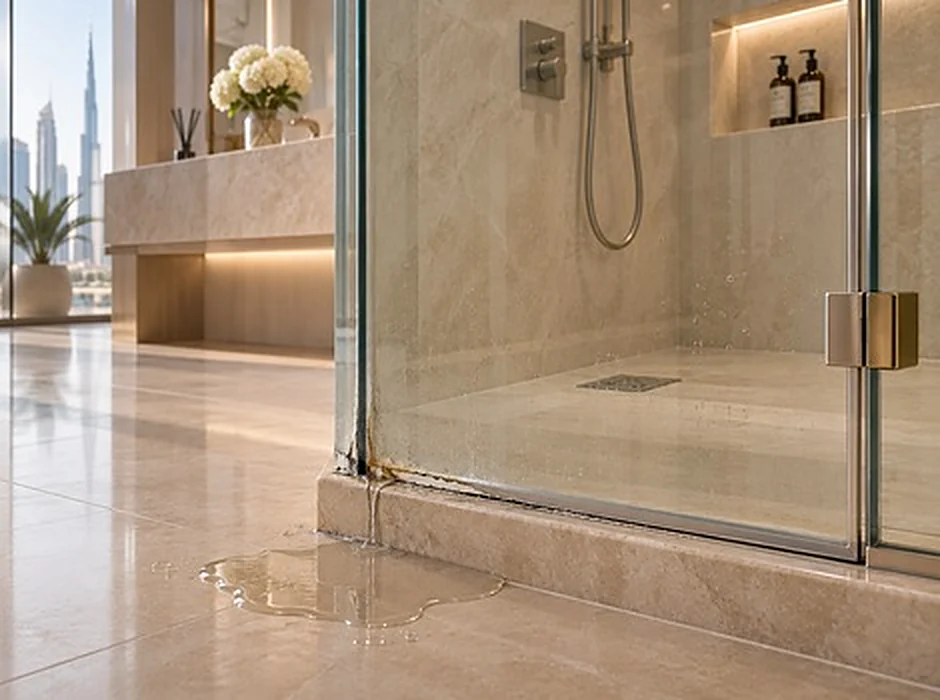
Water reveals hidden defects
Repeated water exposure can reveal failed sealants, waterproofing defects and concealed leaks, causing damp patches and water stains.
- 02
AC performance under load
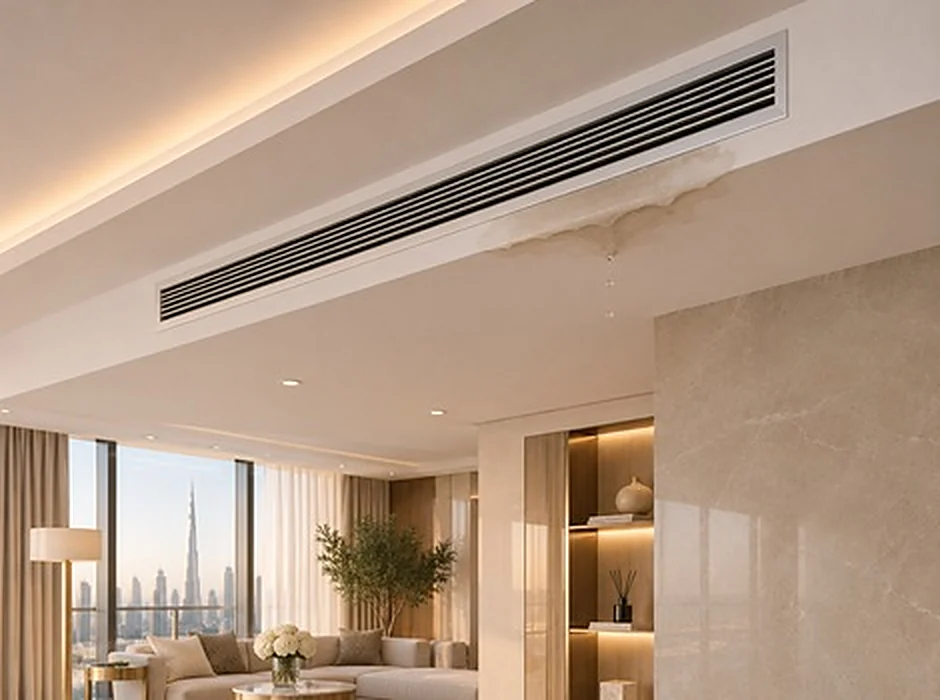
Extended AC operation can expose poor cooling, inadequate airflow and condensate drainage defects not apparent at handover.
- 03
Movement over time
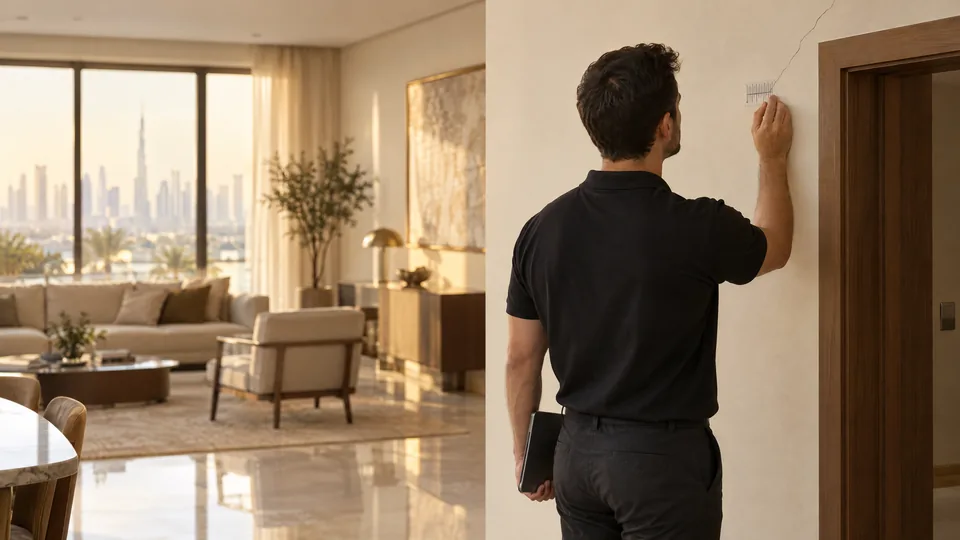
Material shrinkage, thermal movement and settlement can cause cracks, joint separation and misalignment of doors and windows.

Why timing matters
New at handover.
Different after a year.
Comparing your property’s condition at handover and after a year reveals how defects can emerge over time. A DLP inspection helps document these issues while they may still be covered under warranty.


- 1Water stain on the ceiling, from a leak above
- 2Vanity faucet loosened and fallen from its fixing
- 3Floor tile cracked over a hollow spot
- 4Shower glass seal failed, water leaking into the bathroom
- 5Vanity under-light partly not working
Illustrative photos.
How it works
From your DLP end date
to rectification.
- 01
Confirm your DLP end date
Check the end of your defects liability period in your sale agreement or handover documents.
- 02
Book your inspection
Schedule your inspection at least one month before your DLP ends, leaving time to submit the findings.
- 03
Property inspection
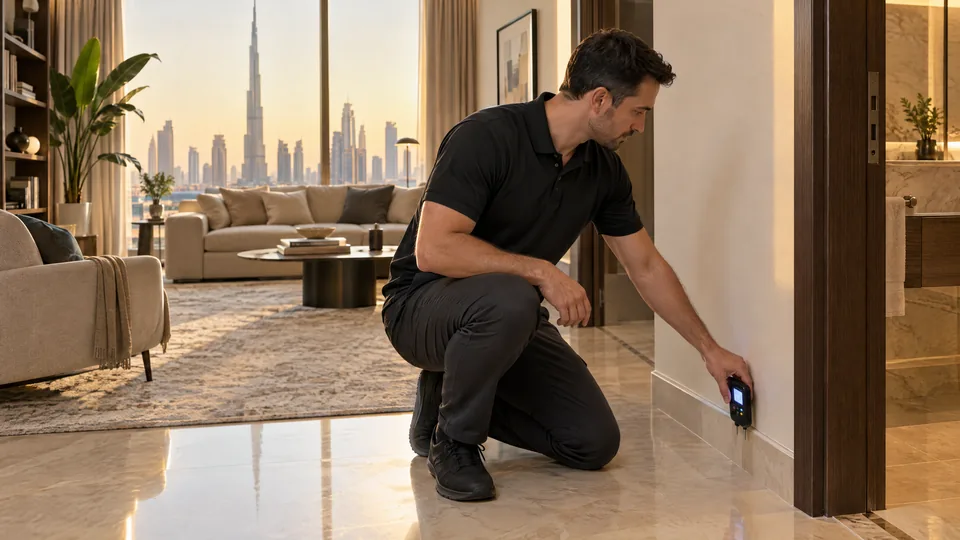
Our inspectors assess finishes, wet areas, and accessible electrical, plumbing, and HVAC systems for defects that have appeared since handover.
- 04
Inspection report
Receive your report within 24 hours, including photographic evidence, defect locations, and priority classifications.
- 05
Submit to the developer
Send the inspection report to your developer before the DLP ends, and keep a record of the submission date.
- 06
Re-inspection (optional)
Where requested, ELUMEX returns to verify each rectified defect against the original report.
ELUMEX’s standard inspection includes Steps 2–4. Re-inspection is an additional service available upon request and quoted separately. Defect rectification remains the developer’s responsibility.
Your timeline
When should you book?
Enter your handover date to estimate when your defects liability period ends and when to book your inspection. For planning only: your contract sets the actual period.
- Period ends around
- Enter your handover date
- Book your inspection by
- —
We suggest booking at least one month before your DLP ends, so the report reaches the developer with time to spare.
What we check
Defects revealed
by a year of use.
Our inspectors start where daily use exposes defects first, wet areas and air conditioning, then assess plumbing, electrical, doors, windows and the roof.
01Interior finishes & wet areas
- Moisture & leakageDamp, staining and signs that waterproofing has failedMoisture meter
- Grout & sealantsShower, bath and basin joints opened up by daily use
- Drainage slopesWater ponding on shower and balcony floors
- Cracks & damageSettlement cracks in walls, ceilings and floors
- Tiles & stoneTiles gone hollow, chipped or lifted since handoverHollow tile detection
02HVAC & air conditioning
- Cooling performanceSupply and return temperatures after a year of runningThermo-hygrometer
- AirflowAir delivery at each accessible grilleAnemometer
- Condensate drainageTrays, drain pipes and drip marks below the units
- Thermal scanSurface temperature patterns that point to leaks or cooling gapsThermal camera
03Plumbing & drainage
- DrainageSlow outlets and blockages, checked with a cameraDrain camera
- Fixtures & connectionsTaps, toilets, seals and accessible pipework under sinks
- Hot & cold waterMixers and heaters after a year of daily use
- Water pressureWhether taps and showers still run at full flow
04Doors, windows & glazing
- Operation & alignmentDoors and windows that now stick, drag or misalign
- Seals & gasketsGaps, damage and breaks in continuity around frames
- Tracks & drainageSliding tracks, rollers and blocked drainage outlets
05Roof
- WaterproofingVisible cracks and deterioration in the roof finish
- DrainageBlocked outlets and signs of ponding
- Seals & flashingsGaps around edges, joints and pipe penetrations
06Electrical
- SocketsEach one tested for correct wiring after a year of useSocket tester
- Safety switchesRCD / ELCB trip testSocket tester
- Distribution boardBreakers, labels and signs of overheatingThermal camera
- Switches & lightsEvery switch and light fitting operated
Roof checks apply to villas and townhouses with safe roof access. Joinery and pool checks are added when your scope includes them.
Every ELUMEX inspection
- Engineer-led25+ years in construction
- 2–4 hours on siteVisual, non-destructive
- Report within 24 hoursPrepared using Onsite
- Re-inspectionWhere your quotation includes it
Frequently asked questions
Questions before your DLP ends.
Short answers. Anything specific? Message us on WhatsApp.
What is a DLP inspection?
A DLP inspection is a snagging inspection carried out before your defects-liability period ends. An engineer records the defects that have appeared since handover, such as leaks, cracks and cooling faults, in a dated report with photographs and locations. You use it to raise those defects with the developer while the period is still running. It is also called an end-of-warranty or 11th-month inspection.
What is the defects-liability period (DLP) in Dubai?
It is the period after handover during which the developer remains responsible for fixing certain defects. For jointly owned property in Dubai, Law No. 6 of 2019 (Art. 40) sets one year from handover for mechanical, electrical, sanitary and drainage installations, and ten years from the completion certificate for structural parts. Your sale agreement may add its own terms. This is general information, not legal advice; check your own contract.
When should I book a DLP inspection?
Book it with enough time to receive the report and send it to the developer before the period ends. In a one-year period, that usually means around the 11th month, which is where the name 11th-month inspection comes from. If your end date is already close, give us the date when you get in touch and we’ll tell you what we can arrange.
I’ve already spotted a leak. Should I wait for the inspection?
No. Report an active leak to the developer or building management in writing as soon as you see it, because water damage spreads. The inspection can still record the leak and the area around it, but it shouldn’t be the first time anyone hears about it. Keep your photos and the date you reported it.
Can thermal imaging find hidden leaks?
Thermal imaging can point to a hidden leak, but it can’t confirm one on its own. The camera shows differences in surface temperature, and damp areas often read differently from the wall around them. It cannot see through walls, so suspicious areas are checked with a moisture meter and the report records what the readings show.
Does the developer have to fix everything in the report?
Not necessarily. What the developer must repair depends on the law, your sale agreement and the cause of each defect. The report doesn’t decide responsibility. It gives you dated, photographed, located evidence to put in front of the developer. For what your own agreement says, a lawyer is the right person to ask.
My property is rented out. Can you still inspect it?
Yes. Agree a time with your tenant and tell us who will let us in; we inspect around their furniture and belongings. Tenants usually know where the damp patch or the dripping AC is, so ask them before the visit. If you live abroad, we can still inspect for you and go through the report with you on a video call.
Do you inspect villas as well as apartments?
Yes. We inspect apartments, townhouses, villas and penthouses in Dubai, Abu Dhabi and Ras Al Khaimah. In a villa or townhouse the scope can add the roof, and the pool where there is one and it’s included. Tell us the property type and size when you get in touch, and we’ll confirm what the inspection covers before you book.
Talk to us
Tell us when your period ends.
Send the property, its size and the end date in your contract. We’ll reply with a quote and a date that leaves you time to act.
Also useful: New-Build Handover Snagging