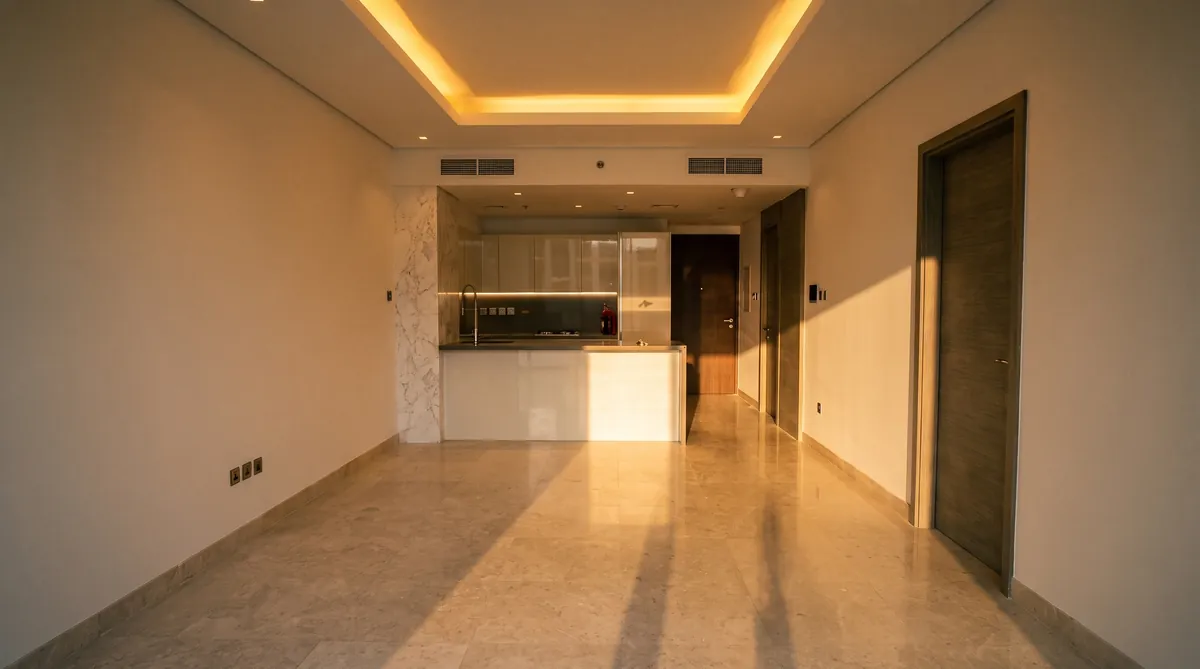





Project Handover Snagging & QA/QC
Ready when
your project is.
Pre-handover snagging for developers and contractors in Dubai, Abu Dhabi and Ras Al Khaimah. Units and common areas inspected as each batch is released, with every defect tracked until it is closed.
- For
- Developers and main contractors
- Book
- When a batch meets your readiness criteria
- Covers
- Units, accessible common areas and de-snagging rounds
Why snag before release
Handover is your last
empty-unit window.
Before keys, your contractor walks into an empty unit and fixes what is listed. After keys, each defect needs an appointment, an occupied home and a reply to the buyer’s own snag list. A check before release puts the findings in your hands first. Your handover team then starts key collection knowing which items are open and which are closed, unit by unit, across the whole batch.
- 01
Fix it while the unit is empty
No furniture to move, no access to book, no buyer waiting at the door. Rectification stays a site task rather than an after-sales visit.
- 02
Repeat defects show early
Findings from the first batch show which defects recur across a unit type, so your contractor can correct them before later batches are released.
- 03
Written for the people who fix it
Founders with 25+ years of developer & contractor experience. Each finding is located and photographed the way a site team needs it to act.
The handover challenge
Units come ready in batches.
So do we.
Contractor dates move. Inspection demand peaks, then drops. We size the team to your release plan and agreed readiness criteria, not to a fixed calendar.
What we check
What every unit is checked for.
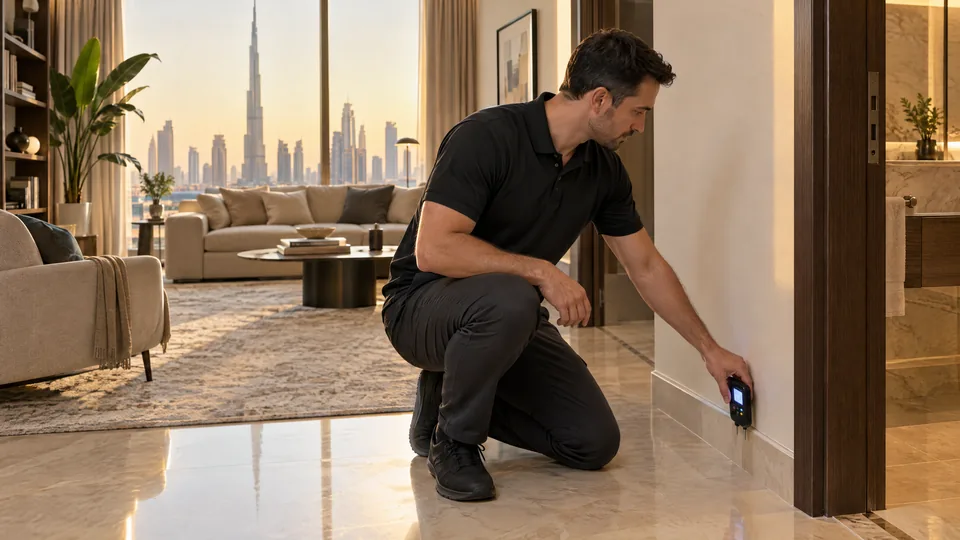
The checks run in each unit and in the accessible common areas within the agreed scope, using the tools shown.
01Interior finishes & wet areas
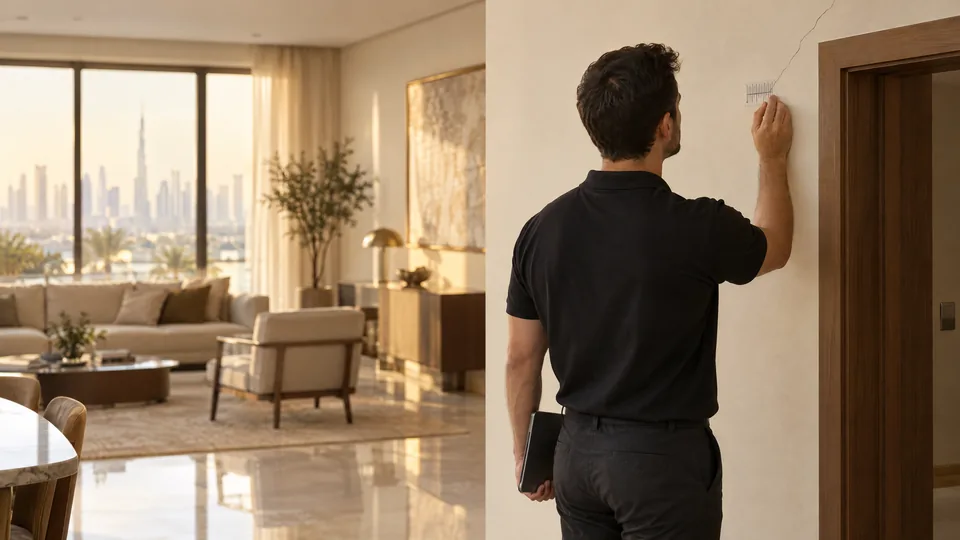
- Cracks & damageWalls, ceilings and floors, including common areas in scope
- Tiles & stoneHollow areas, chips and visible repairsHollow tile detection
- Levels & alignmentUneven floors, walls and tile edgesSpirit level
- Grout & sealantsGaps, cracks, skirting and joint finishes
- Wet-area fallsFalls towards drains and water ponding
02Plumbing & drainage
- DrainageFlow, plus camera checks for blockages and debrisDrain camera
- Leaks & moistureVisible leaks and damp around wet areasMoisture meter
- Water pressurePressure and flow at taps and showers
- Hot & cold waterSupply, temperature and mixer operation
- Fixtures & connectionsTaps, WCs, seals and accessible pipework
03HVAC & air conditioning
- Cooling performanceSupply and return air temperatures in each unitThermo-hygrometer
- AirflowAir delivery at accessible grillesAnemometer
- Thermal scanSurface temperature patterns and cooling irregularitiesThermal camera
- Condensate drainageDrain trays, pipes and signs of leaks
- ThermostatsSettings, response and operation
04Electrical
- SocketsEvery outlet tested for correct wiringSocket tester
- Safety switchesRCD / ELCB trip testSocket tester
- EarthingEarth connection at outlets and the boardMultimeter
- Distribution boardLabels match the circuits
- Switches & lightsEach one operated
05Doors, windows & glazing
- Operation & alignmentOpening, closing and fit, including common-area doors in scope
- Locks & hardwareHandles, hinges and locking mechanisms
- Seals & gasketsGaps, damage and continuity
- Glass conditionScratches, cracks, chips and trapped condensationInspection light
- Tracks & drainageSliding tracks, rollers and clear drainage outlets
Joinery, kitchens and appliances follow the same checklist in fitted units. Roof and pool areas join the scope when they form part of the release. All checks are visual and non-destructive.
A release, closed out
Every unit, from ready
to cleared.
One batch on one screen: each unit inspected, its snags issued to the contractor, the fixes checked on the de-snagging round, and the unit cleared for handover.
- Inspected 0
- Snags open 0
- Fixed, re-checked 0
- Cleared 0
Project visibility
Know where every batch stands.
One report format, agreed before mobilisation, so your delivery team and your contractor read every line the same way.
Each unit record holds
- Photo
- Location
- Priority
- Next action
- Open or closed
| Unit | Status | Next |
|---|---|---|
| A-1201 | Inspected | Issue to contractor |
| A-1202 | De-snagging | Verify rectified items |
| A-1203 | Awaiting release | Confirm readiness |
On site, per batch
How each batch is inspected.
- 01
Readiness on arrival
We confirm access to the released units, with power, water and AC live so services can be tested. Any limitation is recorded.
- 02
Units, one by one
Each unit is inspected against your approved specifications and the agreed checklist, room by room.
- 03
Common areas in scope
The accessible common areas agreed for this release are inspected on the same visit or in their own round.
- 04
Findings issued
Unit reports go to your team in the agreed format, on the reporting rhythm set in the proposal for each batch.
Snagging and de-snagging
Two rounds, two different jobs.
| Topic | Snagging round | De-snagging round |
|---|---|---|
| Purpose | Record the defects in each released unit | Confirm the recorded items were rectified |
| When | Once a batch meets the readiness criteria | After your contractor reports items fixed |
| Scope | The full agreed checklist, units and common areas | The items listed in the previous report |
| Output | One report per unit, every item prioritised | Updated status for each item, open or closed |
| What it tells you | What goes to the contractor | Which units are ready for your handover decision |
How we engage
A clear path from the first conversation.
- 01
Share the release plan
Project, location, unit count and the date of the first ready batch.
- 02
Agree the brief
Scope, checklist, report format and pricing model, set out in writing.
- 03
Plan the batches
Sequence, access and the reporting rhythm for each release.
- 04
Mobilise
The first batch is inspected on the agreed date. The plan adjusts when release dates move.
Frequently asked questions
Questions developers ask.
Short answers. Anything specific? Message us on WhatsApp.
What is Project Handover Snagging & QA/QC?
It is an engineer-led inspection of your units and common areas before they are handed over to buyers, in Dubai, Abu Dhabi and Ras Al Khaimah. Each defect is recorded against your approved specifications so your contractor can close it before keys are released. Rectification stays with your contractor. ELUMEX inspects, reports and re-checks.
At which stage do you get involved?
We get involved before handover, once units meet your agreed readiness criteria. We snag each released batch, then return after your contractor’s rectification. If you need checks at an earlier stage of the project, tell us in your brief and we can discuss them for that project.
What do you inspect in units and common areas?
We inspect units and the accessible common areas within the agreed scope, against your approved specifications. That covers finishes and wet areas, plumbing and drainage, air conditioning, electrical points, doors, windows and glazing, and joinery. Inspections are visual and non-destructive, supported by tools such as a thermal camera and a drain camera where appropriate. The exact scope is fixed in writing before mobilisation.
How do you plan and price a large release?
Large releases are inspected in agreed batches. The team, sequence and reporting rhythm for each batch are set against your release plan and readiness dates. Pricing is per unit, per batch or per project scope, agreed with you in writing before mobilisation. Send the project, unit count and expected readiness, and we will propose a model.
Who carries out the inspections?
Civil engineers lead the work. Our founders have delivered buildings from the developer and contractor side in the UAE and Canada, so they know where defects originate and how they get rectified. ELUMEX is registered with the Dubai Land Department and with RERA for Property Observer activity (Licence No. 1651254 · RERA No. 64616), and holds InterNACHI CPI certification.
How are findings reported?
Each unit gets one report, prepared using Onsite. Every observation is photographed, located and given a priority, with a next action for your contractor. Open and closed items are tracked per unit and per batch, so your delivery team can see the status of a whole release without reading every report.
How quickly do we receive reports?
The reporting rhythm for each batch is agreed in the proposal, set against your release plan and batch sizes. For a single inspection, the report is issued within 24 hours. Your contractor knows when each set of findings will arrive and can plan rectification around it.
Do you carry out de-snagging after rectification?
Yes. Once your contractor reports items as fixed, we return for a de-snagging round, re-check those items on site and update each one as open or closed. You can then see which units are clear for handover. The number of de-snagging rounds is set in the proposal.
Can you work with our contractor and QA/QC team?
Yes. We work to your inspection criteria and your contractor’s rectification cycle, and share findings in a format your teams can act on. Acceptance stays with you and your appointed project parties: ELUMEX records, reports and verifies, and does not sign off units on your behalf.
What do you need from us before we start?
We need access to the units and common areas you are releasing, with power, water and air conditioning running so fittings, drainage and cooling can be tested. We also ask for your specifications, readiness criteria and release plan. If a service is unavailable on the day, we record the testing limitation and a return visit may be needed.
Talk to us
What is your next release?
Five details are enough to scope it.
- Project and location
- Approximate unit count
- First ready batch
- Support required
- Your brief